
Reviewed · FAMAGUSTA GHOST CITY TOURS
FAMAGUSTA & NICOSIA Private Tour from Kyrenia
Famagusta and Nicosia give you two very different views of Cyprus in one long day: ancient ruins by the sea, a walled medieval city, an abandoned resort, and Ottoman-era buildings in the capital. The private format lets you ask questions as you go, and guides such as Sedat and Cemal add personal stories about Cyprus and the events of 1974.
I like the fact that lunch and admission fees are included, so the $222.29 price covers more than transport and sightseeing. I also like the human side of the tour. Sedat, a schoolteacher and someone who lived through the 1974 war, has been able to explain modern Cyprus from personal experience. The main drawback is the pace: with seven major stops over 8 to 9 hours, several visits last only 10 to 30 minutes.
Key points at a glance
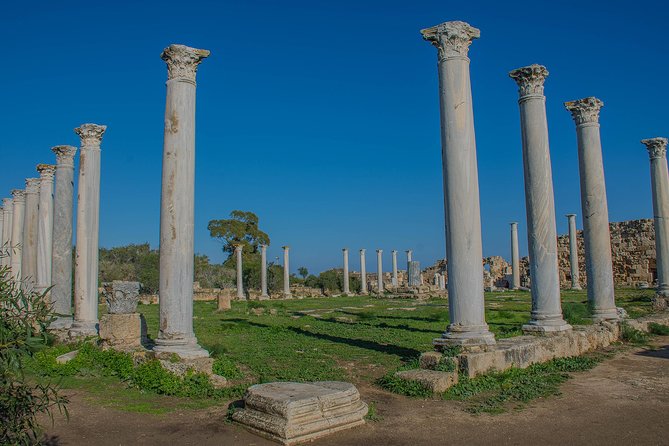
- Ancient Salamis in a short visit: See the Roman theatre, gymnasium, and thermal bath remains at Cyprus’s major ancient city.
- Famagusta’s layered past: Walk through a walled old city, see Lala Mustafa Pasha Mosque, and look toward the abandoned Varosha resort.
- A private guide with a personal viewpoint: Guides including Sedat and Cemal provide history, local context, and time for questions.
- North Nicosia’s landmark buildings: Visit the former Cathedral of Saint Sophia, now Selimiye Mosque, and the Ottoman Buyuk Han.
- A useful all-in price: Lunch, entrance fees, transport, and a private touring setup are included in the quoted price.
- A long but efficient day: Pickup begins at 9:00 am in Kyrenia, with the tour returning to the same meeting point.
Why this private day trip covers so much
This is not a slow, single-site outing. It is a full day built around contrasts. You begin with Christian art and archaeology at St Barnabas, move to the ancient city of Salamis, then continue to Famagusta’s churches, walls, and abandoned resort district. The day finishes in North Nicosia, where Gothic cathedral architecture and Ottoman buildings tell another part of the island’s story.
I like this design because Cyprus can be hard to understand from one town alone. Kyrenia gives you a fine base, but Famagusta and Nicosia show the island’s ancient, medieval, Ottoman, and modern divisions in a single route. You get a broad view rather than a deep study of one monument.
The private arrangement matters here. A group tour would need to keep moving, while a private guide can respond to your questions about architecture, religion, Cyprus’s political division, or the 1974 war. Sedat has been described as both a schoolteacher and a resident who lived through that conflict. Cemal has also been noted for combining historical explanation with an easy, entertaining manner.
You should still set sensible expectations. This is a sampler. The listed stop times are brief, including 30 minutes at St Barnabas, 30 minutes at Salamis, 30 minutes in Famagusta’s old city, and only 10 minutes each at Lala Mustafa Pasha Mosque and Varosha. If you prefer to study every inscription or spend an hour over coffee in each city, this schedule will feel rushed.
More Famagusta and Varosha day trips:
- Ghost-Town Famagusta Mini Bus Tour from Protaras and Ayia Napa
★ 4.5 · 298 reviews - Full-day Famagusta: Lost Cities & Coastal Secrets from Paphos
★ 4.5 · 274 reviews - Red Bus Varosha experience in English from Ayia Napa, Protaras
★ 4.5 · 88 reviews
St Barnabas begins the day with icons and pottery
The first stop is St Barnabas Monastery and Icon Museum. The church now serves as a museum, with a collection of Cypriot religious art and other artifacts. The monastery also includes a small archaeological museum with complete pottery pieces dating from various periods, beginning around 4000 BC.
Thirty minutes is enough for a focused look, but not a long museum visit. I would pay attention to the contrast between the two collections: the icon museum gives you a window into Cyprus’s Christian tradition, while the pottery helps place the island in a much older time frame.
This is also a good opening stop because it introduces the island through objects rather than a long lecture. Your guide can explain what you are seeing, and the private format gives you a chance to ask about the church, icons, and archaeological pieces without waiting for a whole bus group.
The entrance fee is included. As with the other indoor and archaeological stops, comfortable shoes are useful, since the day later includes walking through old streets and historic sites.
Salamis shows Cyprus at Roman scale
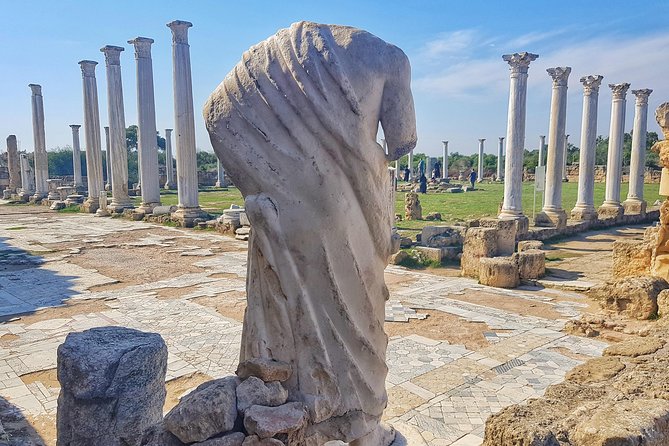
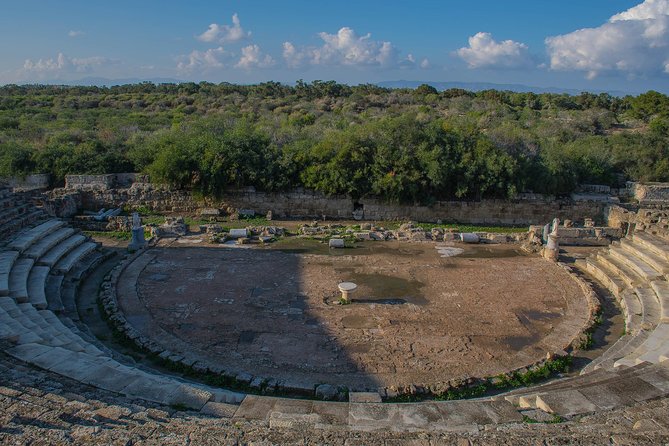
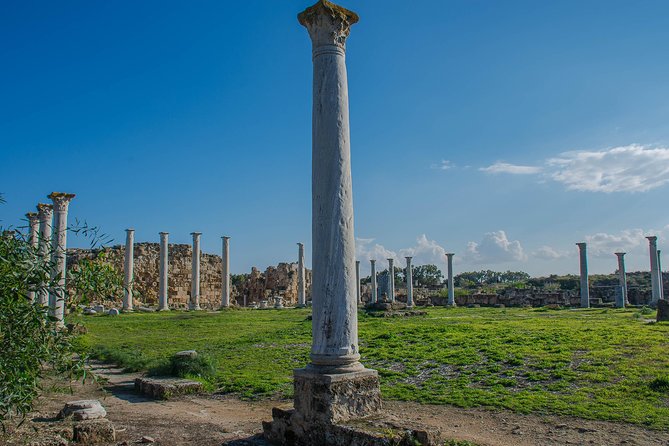
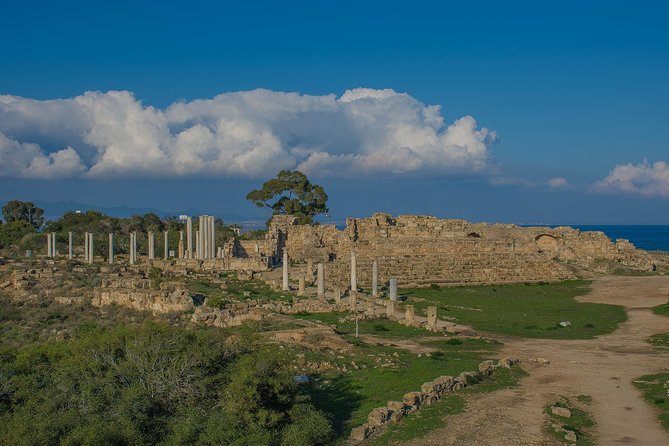
Ancient Salamis is one of the day’s major highlights. This was the most important ancient city in Cyprus and, during the Roman period, one of the largest cities on the island. The city is associated with several major powers, including the Assyrians, Egyptians, Persians, and Romans.
The surviving remains include a Roman theatre, a gymnasium, and thermal baths. Those buildings offer more than attractive ruins. They show how public life worked in a large Roman city and hint at the money, engineering, and social habits of its population.
The Roman theatre and bath complex are the parts I would prioritize during the 30-minute stop. Listen closely to your guide, since the short visit means you will get more from the site if you understand what you are looking at before walking among the ruins.
This is the clearest place on the tour to see ancient Cyprus as a major Mediterranean center rather than a quiet provincial outpost. The drawback is time. Salamis is large, and half an hour gives you only a taste of it. If ancient sites are your main reason for booking, ask your guide how to use the visit most effectively.
Famagusta’s walls turn the old city into an outdoor museum
Famagusta’s old city is surrounded by historic walls and contains a dense collection of monuments. The city is often described as an open-air museum, and you will understand why quickly: medieval religious buildings, defensive walls, and streets shaped by several periods of rule are packed into a relatively compact area.
The scheduled 30 minutes is designed for orientation rather than a full walking tour. You can see the character of the walled city and reach its best-known monument, Lala Mustafa Pasha Mosque, without treating every lane as a separate stop.
I like this part of the day because it ties the earlier ancient site to a more recognizable urban setting. Salamis is spread among ruins. Famagusta puts history into streets, walls, and buildings that still define the town.
Famagusta also requires some historical care. The city’s buildings reflect different religious and political periods, and the present-day setting is shaped by the division of Cyprus. A guide who can explain those changes makes the visit much more useful than a quick photo stop.
A few more Cyprus days to weigh up
- Private Discovery Dive + Photos & Videos
★ 5.0 · 577 reviews - Private Diving at Zenobia Wreck in Larnaka
★ 5.0 · 369 reviews - Self-drive Amathunta Private Speedboat to Blue Lagoon, Caves etc
★ 5.0 · 161 reviews - Luxury Eden 18 Private Self-drive boat hire to Blue Lagoon & more
★ 5.0 · 148 reviews
Lala Mustafa Pasha Mosque was once St Nicholas Cathedral
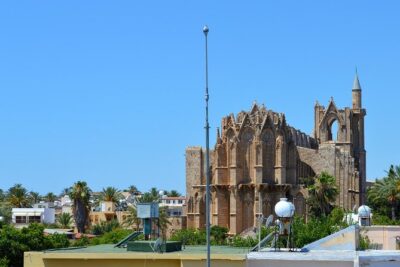
Lala Mustafa Pasha Mosque is Famagusta’s most important monument. The building began as the 14th-century Gothic Cathedral of St Nicholas and was later converted into a mosque by the Ottomans.
Its French Gothic style makes it an unusual sight in Cyprus. Pointed arches, a cathedral-like form, and the building’s scale connect it to medieval European church design, while its current use reflects the island’s later Ottoman period.
Only 10 minutes are assigned here, so you will not have time for a long architectural study. Still, the stop is worthwhile because one building tells a clear story of religious change and changing rulers. Look at the exterior details and ask your guide to explain how the cathedral became a mosque.
This is one of the places where a private guide earns the cost of the tour. Without context, you might simply see an old church-shaped building. With an explanation, you can read the structure as a record of Cyprus’s changing communities and empires.
Varosha gives the modern past a physical shape
Varosha was once a major Cyprus resort. After the division of Cyprus in 1974, it came under Turkish control and was left abandoned. The district is now widely known as the Ghost Town of Famagusta.
The visit is brief, listed at 10 minutes, and functions mainly as a viewing stop. You should not expect a long walk through the resort. Instead, your guide will help you understand how a busy holiday area became an abandoned zone and why the place remains tied to the island’s unresolved political story.
This can be one of the more affecting moments of the day, but it is not light sightseeing. The empty resort is a physical reminder that Cyprus’s division is not only a matter of maps and government offices. It has shaped neighborhoods, businesses, homes, and daily life.
Because the subject is sensitive, I would use the opportunity to ask respectful questions. Sedat’s experience of living through the 1974 war may provide a personal angle that a standard script cannot. You should also remember that a short stop cannot explain every side of the issue.
Kyrenia Gate marks the move into Nicosia
The route then reaches the Kyrenia Gate in North Nicosia. Historically called Porta del Proveditore, it is one of the three original gates in the Venetian walls and was built in the 16th century as part of the city’s new defenses.
The gate is a useful transition point. Famagusta shows a fortified medieval city by the coast, while Kyrenia Gate introduces Nicosia as a walled capital. Even a short look helps you understand how defensive walls shaped movement into and around the old city.
The provided schedule does not give a separate duration for this stop, so treat it as a brief landmark visit rather than a long guided tour. If you enjoy city walls and military architecture, ask your guide to point out the gate’s place within the wider Venetian fortifications.
Selimiye Mosque joins Gothic design with Ottoman use
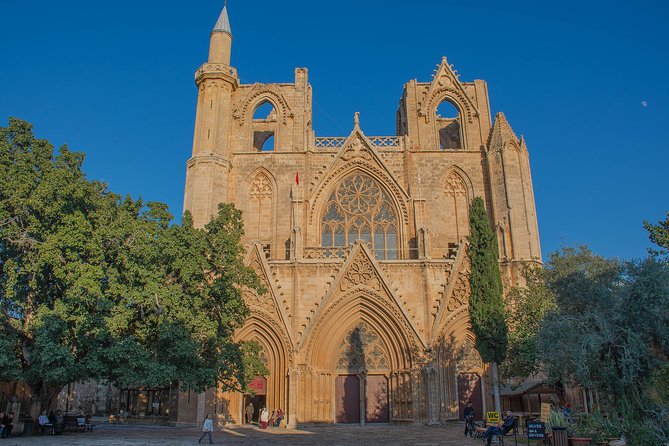
Selimiye Mosque, historically the Cathedral of Saint Sophia, is North Nicosia’s most prominent landmark. It was once a Roman Catholic cathedral and was converted into a mosque by the Ottomans.
The building is described as the largest and oldest surviving Gothic church in Cyprus. Its design recalls the medieval cathedrals of France, making it another strong example of European Gothic architecture on the island.
The 15-minute stop is short, but the building’s story is concentrated and easy to grasp. I would focus on the exterior, the Gothic form, and the change in function. The site shows how a single structure can carry several identities over time without losing its architectural importance.
As with Lala Mustafa Pasha Mosque, remember that this is a religious building in current use. Your guide can help you understand the history while also explaining the proper way to enter and observe the site.
Buyuk Han ends the route on a more human scale
Buyuk Han, or the Great Inn, is an Ottoman building in the traditional market center inside Nicosia’s walls. Built in the 16th century, it is the largest inn on the island and one of only two remaining inns in Cyprus that retain their original form and appearance.
After the grand scale of cathedrals, ancient theatres, and city walls, Buyuk Han offers a more intimate look at trade and travel. Inns such as this served as places where people could stop, conduct business, and move through the city. The building’s layout and preserved appearance help you picture daily commercial life during the Ottoman period.
The 15-minute stop is enough to see the courtyard and understand the building’s role. It may also be the most relaxed point of the Nicosia portion, depending on the timing of the day. You will have seen religious buildings and military walls; here, the focus shifts to commerce and ordinary movement through the city.
What the $222.29 price really includes
At $222.29 per person, this is not a budget sightseeing shuttle. The value comes from what is bundled into a private day: hotel pickup where available, transportation, a guide, lunch, entrance fees, and a route covering two important Cypriot cities plus major ancient and modern sites.
Admission fees are included at St Barnabas and Salamis, and there is no extra ticket charge listed for the Famagusta and Nicosia stops. Lunch is also included, which makes the final cost easier to judge. You are not adding entrance tickets and a midday meal to a low headline price after booking.
The private format is the strongest reason to consider the expense. You are paying for a personalized day rather than simply a vehicle seat. If you are a couple, family, or small group that values questions and a flexible conversation with the guide, the price may make sense.
The value is weaker if you want long, independent visits at each site. The schedule is packed, and the tour’s purpose is to give you a carefully guided overview. You are paying for range and context, not hours of free time.
Pickup, timing, and who will enjoy this most
The tour begins at 9:00 am at the ticket office in Baldoken Car Park, on Ziya Rızkı Cd in Kyrenia city center. It ends back at the same meeting point.
Hotel pickup and drop-off are available from hotels in Kyrenia, Alsancak, Lapta, and Çatalköy. You need to contact the provider with your exact location, so do not assume every hotel outside those areas is included.
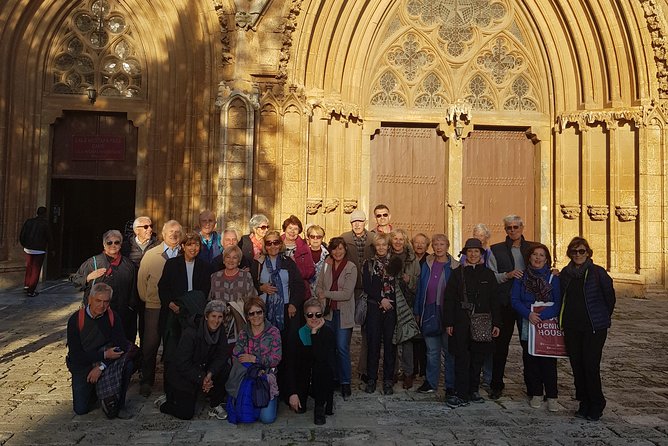
The tour is offered in English. It is a private activity, so only your own group takes part. Most people can participate, and the meeting point is near public transportation, though the day still includes walking around historic sites.
I would recommend this for you if:
- You want a single day that covers archaeology, churches, mosques, city walls, and the modern division of Cyprus.
- You prefer asking a guide direct questions instead of listening to a fixed group commentary.
- You are staying in Kyrenia and do not want to arrange separate transport to Famagusta and Nicosia.
- You value an all-inclusive price with lunch and entry fees already covered.
- You are comfortable with brief visits and a full 8 to 9-hour schedule.
I would look elsewhere if your priority is a slow archaeological visit, extensive shopping time, or a long stay at each monument. The tour gives you breadth, but the clock controls the day.
Should you book the Famagusta and Nicosia tour?
Book it if you want the most efficient introduction to eastern Cyprus and North Nicosia from Kyrenia. The combination of Salamis, Famagusta, Varosha, Selimiye Mosque, and Buyuk Han is hard to arrange independently in one day, especially if you also want lunch, entrance fees, and a guide included.
The strongest feature is the private human connection. A guide such as Sedat can explain the island through both teaching and personal memory, while Cemal brings a warm, engaging style to the drive and stops. Just keep your expectations realistic: the tour is a fast-moving overview, not a series of long museum visits.
One practical warning matters before you pay: the booking is non-refundable and cannot be changed for any reason. Confirm your pickup location and schedule first. If the pace suits you, this is a useful and unusually varied way to see far more of Cyprus than Kyrenia alone.
FAQ
How long does the tour last?
The tour lasts approximately 8 to 9 hours and begins at 9:00 am.
Where does the tour start and end?
It starts at the ticket office in Baldoken Car Park, Ziya Rızkı Cd 95, in Kyrenia city center. It ends back at the same meeting point.
Is hotel pickup available?
Yes. Pickup and drop-off are available from hotels in Kyrenia and from hotels in Alsancak, Lapta, and Çatalköy. You should contact the provider with your exact location.
Is this a private tour?
Yes. Only your group participates in the activity.
Are lunch and entrance fees included?
Yes. Lunch and all entrance fees listed for the experience are included.
What language is the tour offered in?
The tour is offered in English.
Can I cancel or change the booking?
No. The experience is non-refundable and cannot be changed for any reason.
Recently added around Cyprus
- Relaxing Adults-only Blue Lagoon Catamaran Trip from Protaras★ 3.5 · 17 reviews
- Cyprus Wines Tasting in Larnaca city with Transfers from Ayia Napa and Protaras★ 5.0 · 6 reviews
- Private Scuba Diving Experience in Cyprus★ 5.0 · 13 reviews
- Guided snorkeling trip to the turtles in Protaras★ 4.5 · 13 reviews
- Sunset Boat Trip to Cape Greco and Blue Lagoon★ 4.0 · 8 reviews
- The Mermaid Cruise by Medusa Cruises – 2:30-Hour Family Adventure★ 5.0 · 11 reviews
- San Antonio Ruby Sunset Cruise from Protaras★ 4.5 · 8 reviews
- San Antonio Premier Sunset Adults Only Cruise from Protaras★ 5.0 · 6 reviews
Famagusta Ghost City Tours, compared.
Ghost-Town Famagusta Mini Bus Tour from Protaras and Ayia Napa
Read our review →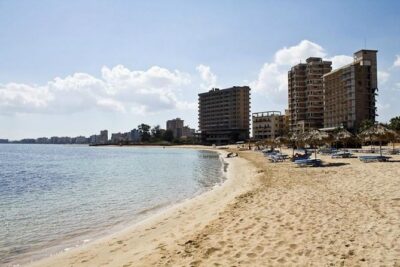
Full-day Famagusta: Lost Cities & Coastal Secrets from Paphos
Read our review →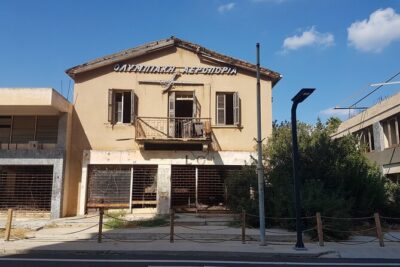
Red Bus Varosha experience in English from Ayia Napa, Protaras
Read our review →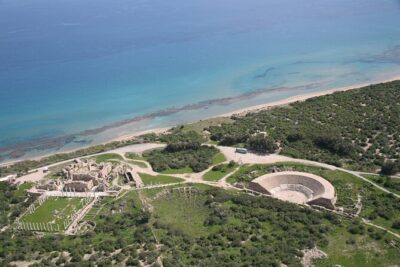
Day Tour to Famagusta, Ghost Town & Ancient Salamis
Read our review →
A Day Trip to Medieval FAMAGUSTA (Kyrenia, Nicosia or Famagusta )
Read our review →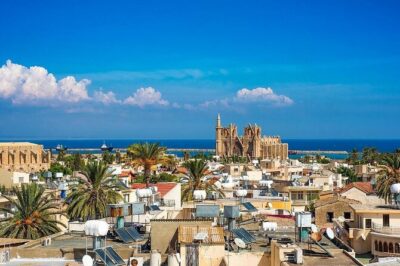
Famagusta and Blue Lagoon Jeep Safari from Protaras
Read our review →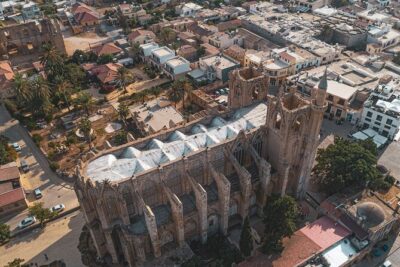
From Nicosia and Kyrenia: Famagusta & Kyrenia as Circular Tour
Read our review →
Browse the lists this tour appears in