
Reviewed · NICOSIA TOURS
Divided Capital NICOSIA
Nicosia is best understood on foot, where one city becomes two at the Ledra Street crossing. This private tour takes you through old gates, Ottoman-era streets, a converted Gothic cathedral, and Buyuk Han, while your guide explains how Cyprus’ divided capital took shape.
I like the private format, which lets you ask questions and adjust the pace, and I like the chance to see both sides in one morning. Guide Sirin receives especially warm praise for her patient teaching, friendly manner, and useful lunch suggestions. The main drawback is that the southern side may receive less detailed commentary than the northern side.
Key points at a glance
- One city, two administrations: Cross between North and South Nicosia at the Ledra Street checkpoint.
- Private tour for up to four: The group price is $216.86, making the cost more reasonable when shared.
- Sirin is a strong guide choice: Her history, culture, patience, and flexibility are repeatedly praised.
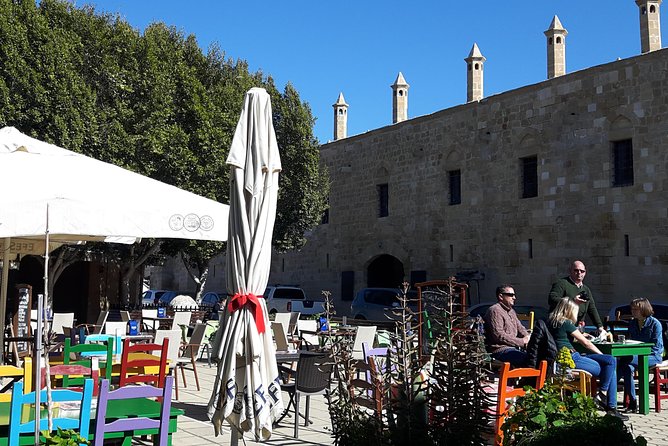
- Buyuk Han gives you a proper pause: Allow time for Cypriot coffee and traditional borek at this historic inn.
- A compact history lesson: In about three hours, you cover medieval, Venetian, Ottoman, and modern Cypriot landmarks.
- Bring your passport: You must show valid passports at the checkpoints.
Why divided Nicosia makes a good walking tour
Nicosia is not a city you understand fully by ticking off isolated sights. Its importance comes from the way old walls, religious buildings, Ottoman neighborhoods, and a modern border all sit within a relatively compact center.
This tour gives you that larger picture. You begin and end at the Ledra Street crossing, then follow a route that includes both the Turkish and Greek sides of the capital. The city’s divisions are not treated as an abstract political topic. You see them in the streets, at the checkpoint, and in the contrast between the landmarks on either side.
A guide is useful here because many of the places are easy to walk past without context. A column may look like a simple old stone monument. A mosque may appear to be only another historic building. With an explanation, you learn how Venetian, Lusignan, Ottoman, and modern Cypriot periods overlap in the same city.
The experience lasts about three hours and is private for your group of up to four people. That is a sensible size for a walking tour. You can ask about the history of Cyprus, pause for photographs, or ask your guide to explain something that catches your eye without holding up a large group.
A few more Cyprus days to weigh up
- 3-hour Nicosia Segway Tour
★ 5.0 · 323 reviews - Nicosia: Green Line and Buffer Zone Guided Walk
★ 5.0 · 147 reviews - NORTHERN CYPRUS ALL-IN-ONE Private Day Trip from Nicosia
★ 5.0 · 89 reviews
Starting at the Ledra Street crossing

The tour meets at Ledras in central Nicosia, at the Ledra Street crossing point. This is both a practical meeting place and a fitting introduction to the city.
You will need a valid passport to show at the checkpoints. This is not a detail to leave in your hotel room. The crossing is part of the tour, and the passport requirement applies to the movement between the two sides.
Because the tour starts and ends here, you avoid arranging separate transport between the beginning and end. The activity runs Monday through Saturday from 9 a.m. to 1 p.m., and the listed tour time is approximately three hours. That morning schedule also leaves your afternoon open for lunch, more sightseeing, or a return to a favorite part of the old city.
Kyrenia Gate and the old city walls
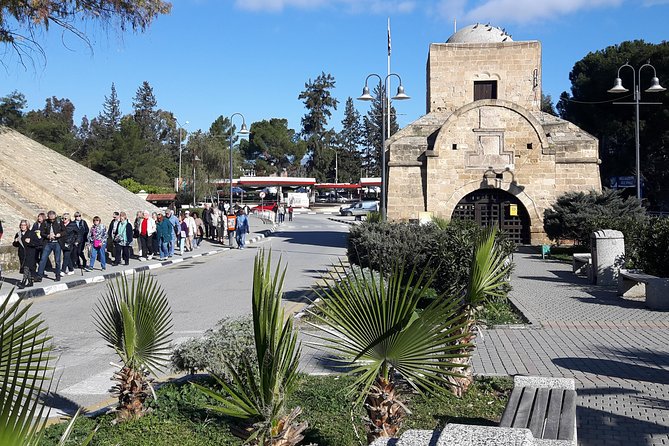
The first major stop is Kyrenia Gate, one of the oldest entrances through Nicosia’s walled city. You have about 20 minutes here, enough to look closely, take photographs, and hear how the gate fitted into the city’s defenses and daily life.
This is a useful first stop because it puts you in the physical setting of the old capital. Nicosia is not just a collection of monuments. Its gates and walls explain how people entered, left, and protected the city.
Do not expect a long indoor museum visit here. The appeal is the structure itself and the story supplied by your guide. If you enjoy military architecture, old city planning, and the way historic cities controlled movement, this stop should hold your attention.
Samanbahce Quarter and its central cistern
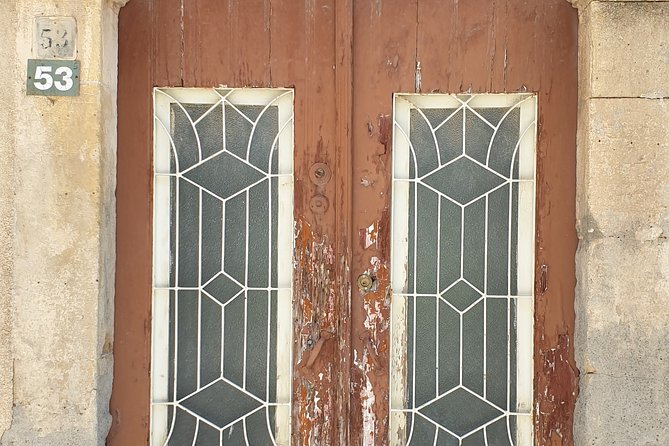
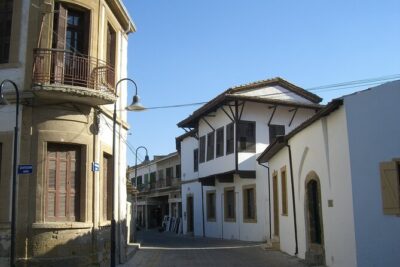
The Samanbahce Quarter offers a different view of the city. Built in 1900 by Ottoman Saban Pasa, it contains 72 houses originally given to people in need.
You will see a cistern at the center of the quarter, an important reminder that ordinary housing and water supply were part of the city’s history. This is less grand than a cathedral or fortified gate, but that is exactly why it matters. You get a glimpse of social history, not only monuments built for rulers and religious institutions.
The stop lasts about 10 minutes, so expect a brief walk and explanation rather than a long neighborhood visit. Keep your eyes on the layout of the houses and the central cistern. These smaller details often tell you more about everyday life than a formal monument does.
A completely different sort of day on the island:
- Blue Lagoon (Akamas) Bus & Boat Tour with Water Slide from Paphos
★ 4.5 · 2,496 reviews - Cpt Marko – Blue Lagoon & Turtle Cruise with Optional Lunch
★ 5.0 · 1,955 reviews - 100% Cyprus – Tour to Troodos mountains and villages (From Paphos)
★ 4.5 · 1,562 reviews - APHRODITE II -LAZY DAY CRUISE-BLUE LAGOON,TURTLE COVE, with LUNCH
★ 5.0 · 1,395 reviews
The Venetian Column and layers of empire
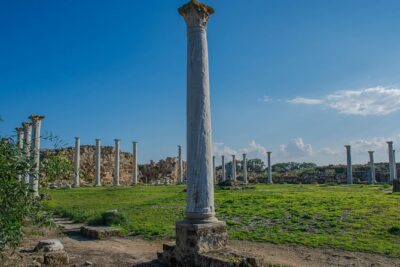
The Venetian Column has a complicated journey. It was brought to Nicosia from the ancient city of Salamis during the Venetian period, and a symbol of the Lion of St. Mark was once placed at the top.
Your guide explains the column’s story during a 10-minute stop. This is a good example of why Nicosia rewards guided sightseeing. The stone itself is not large enough to explain its own importance. Its meaning comes from the movement of objects, rulers, and symbols across Cyprus.
The column also helps tie the city to the island’s wider past. You are not looking at one isolated Venetian object. You are seeing how earlier ancient material was reused during a later period of rule.
Selimiye Camii, a cathedral turned mosque
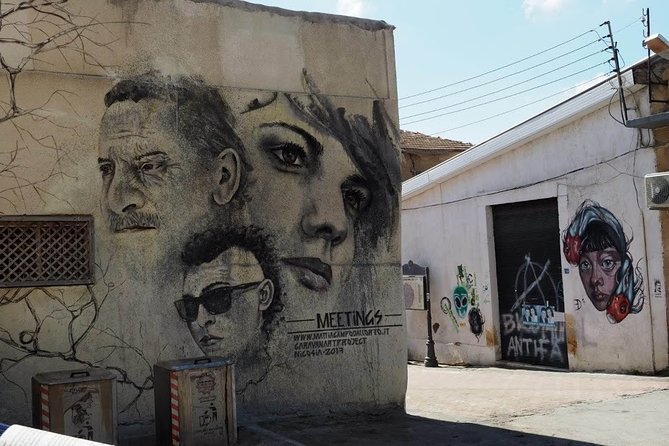
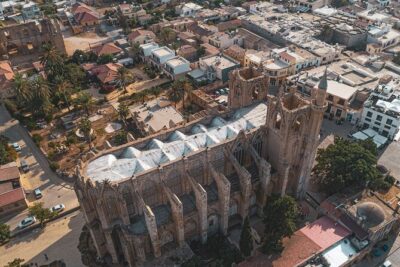
Selimiye Camii is one of the tour’s most striking stops. The building began as a cathedral under the Lusignans and was designed in a Gothic style. After the Ottomans arrived in Cyprus in 1570, minarets were added and the building was converted into a mosque.
It was known as Agia Sophia Mosque until 1956, when it took the name Selimiye Mosque. That sequence gives you a direct lesson in how buildings change meaning as political and religious control changes.
You have about 20 minutes here. Your guide can help you read the building as both a Gothic cathedral and an Ottoman mosque, rather than forcing it into only one category. Look for the contrast between the cathedral form and the later additions.
The supplied details do not specify interior access, so plan around seeing the exterior and hearing the history unless your guide confirms that you may go inside. This is one of the places where your guide’s explanation carries much of the value.
Buyuk Han, the tour’s best pause
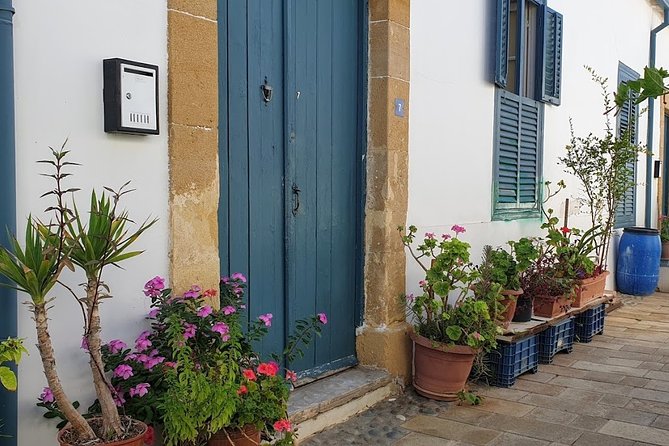
Buyuk Han receives the longest single stop, about 40 minutes, and that is welcome. Built in 1572 by Muzaffer Pasha, the inn has a cistern and a mescit, or small prayer space, in its center.
Today it is one of Nicosia’s most appealing historic stops. You can stretch your legs, have Cypriot coffee, and try traditional borek. The break adds a human scale to a morning filled with dates, rulers, and architectural changes.
I would treat this as more than a refreshment stop. A historic inn works best when you have time to notice its central arrangement and imagine how it once served people passing through the city. You are also free to ask your guide about food and places to eat after the tour.
Sirin is specifically praised for offering useful lunch suggestions. Since lunch is not included, that advice can help you make a better choice after the walking tour ends. The coffee and borek are also at your own expense, so bring a little extra money if you want to use the break as intended.
Famagusta Gate and the city’s defensive edge
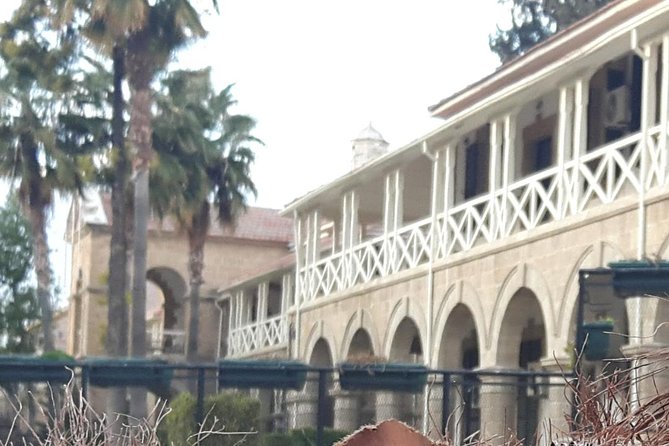
Famagusta Gate is one of the three gates that surround Nicosia. The tour allows about 40 minutes here, including time to walk by, stop for photographs, and hear its history.
That generous timing gives you room to look at the gate without rushing. Gates are often treated as quick photo stops, but they show how the walled city connected to the wider island. The name also links Nicosia to Famagusta, another major Cypriot city.
The itinerary describes this as a walk-by stop rather than a guaranteed interior visit. If you want detailed information about access inside the gate, ask when you book or confirm with the guide on the day. The value here is the combination of the structure, its place in the ring of walls, and the explanation that brings it to life.
Archbishop’s Palace and the southern side
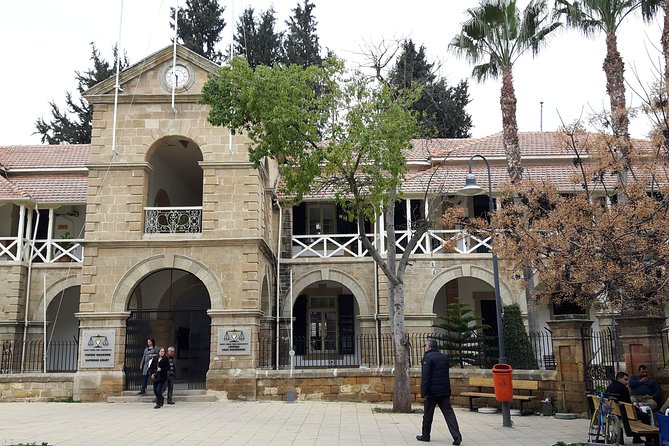
The tour stops by the Archbishop’s Palace for about 20 minutes. You will take photographs while your guide explains its history.
This stop provides an important counterweight to the Ottoman and Turkish-side sights earlier in the route. It gives the southern side of Nicosia a visible historical marker and helps you compare the city’s religious and political centers.
One point to keep in mind is the balance of commentary. Sirin is praised for her strong understanding of Nicosia’s history and culture, particularly on the northern side. One less positive assessment felt that the southern side received less detailed explanation. If learning about Greek Cypriot history is your main goal, tell your guide that at the start and ask for extra context when you reach the palace and crossing.
That is one advantage of a private tour. You do not have to accept a fixed level of detail. You can make your interest clear and use the time where it matters most to you.
What the three-hour pace feels like
The listed stops add up to roughly three hours, and the route covers a good deal of ground. You should expect steady walking, outdoor sightseeing, short explanations, photography, and a break at Buyuk Han.
The pace appears practical rather than hurried. The longest pauses are at Buyuk Han and Famagusta Gate, while smaller stops such as Samanbahce Quarter and the Venetian Column receive about 10 minutes each. That arrangement makes sense because some places need a longer look, while others work as brief history lessons along the route.
Wear comfortable walking shoes and dress for a morning spent moving between outdoor sites. The tour information does not list a special mobility restriction, and most people can participate, but the exact walking surface and access arrangements are not specified. If you have mobility concerns, contact the operator before booking.
Children under 12 must be accompanied by their parents. Service animals are allowed, and the meeting point is near public transportation.
What you pay and who gets good value
The price is $216.86 per group of up to four people, not per person. For one person, that is a substantial private-tour price. For four people sharing the cost, it works out to about $54.22 each before any food or drinks.
The value comes from the guide’s time and the private format. You are not paying only for a list of landmarks. You are paying for a route through a politically and historically complicated city, with the chance to ask questions and adjust the focus.
That value is strongest if you care about history, architecture, Cyprus, or the modern division of Nicosia. It is less compelling if you only want quick photographs or prefer to wander alone with a map.
Food is not included. The break at Buyuk Han is part of the experience, but coffee, borek, and lunch afterward cost extra. Confirmation is provided when you book, and the activity is non-refundable, with no changes allowed after booking. Choose your date carefully.
Who should book this Nicosia experience
I would recommend it most strongly to history-minded visitors who want a clear introduction to the city in one morning. It is also a good match for first-time visitors who want an insider’s explanation rather than a self-guided walk through disconnected sights.
The private setup suits couples, families, and small groups of friends. You have room to ask about the Ottoman period, the Venetian column, the cathedral-to-mosque conversion, or the modern border without waiting for a large group to move on.
Sirin’s style appears especially suitable if you value patience, friendliness, and cultural explanation. The tour is not only about dates. It connects buildings to the people and systems that shaped the city.
I would be more cautious if your main interest is an equally detailed treatment of both sides of Nicosia. The route does include both Greek and Turkish sides, but the strongest feedback points to more depth on the northern side. Set that expectation correctly, then tell the guide what you want to learn.
Should you book Divided Capital Nicosia?
Book it if you want a private, guided introduction to Nicosia’s divided center and you value history over free time. The route covers a lot in three hours, the price becomes fair when shared by four people, and Buyuk Han gives the morning a pleasant pause.
Before booking, make sure everyone has a valid passport and understands that lunch is extra. Ask for added attention to the southern side if that is important to you. With those points in mind, this is a strong choice for seeing the city’s major historic markers while gaining the context that a solo walk may miss.
FAQ
How long does the Nicosia tour last?
The tour lasts approximately three hours.
Where does the tour start and end?
It starts at Ledras, Nicosia 1011, Cyprus, near the Ledra Street crossing point, and ends back at the same meeting point.
Does the tour visit both sides of Nicosia?
Yes. The route includes the border crossing between North and South Nicosia and visits landmarks associated with both sides of the city.
How many people can join the private tour?
The price covers one private group of up to four people.
Do I need to bring a passport?
Yes. You must bring a valid passport to show at the checkpoints.
Is food included in the price?
No. Lunch is not included. The itinerary allows time at Buyuk Han for Cypriot coffee and traditional borek, but those purchases are extra.
Recently added around Cyprus
- Relaxing Adults-only Blue Lagoon Catamaran Trip from Protaras★ 3.5 · 17 reviews
- Cyprus Wines Tasting in Larnaca city with Transfers from Ayia Napa and Protaras★ 5.0 · 6 reviews
- Private Scuba Diving Experience in Cyprus★ 5.0 · 13 reviews
- Guided snorkeling trip to the turtles in Protaras★ 4.5 · 13 reviews
- Sunset Boat Trip to Cape Greco and Blue Lagoon★ 4.0 · 8 reviews
- The Mermaid Cruise by Medusa Cruises – 2:30-Hour Family Adventure★ 5.0 · 11 reviews
- San Antonio Ruby Sunset Cruise from Protaras★ 4.5 · 8 reviews
- San Antonio Premier Sunset Adults Only Cruise from Protaras★ 5.0 · 6 reviews
Nicosia Tours, compared.
NORTHERN CYPRUS ALL-IN-ONE Private Day Trip from Nicosia
Read our review →
From Nicosia and Kyrenia: Famagusta & Kyrenia as Circular Tour
Read our review →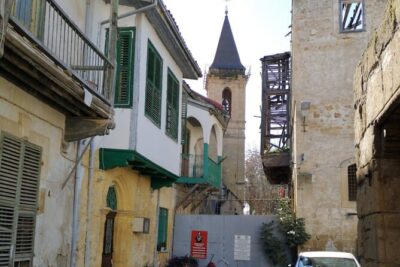
Browse the lists this tour appears in